
Clementine facts for kids
Quick facts for kids Clementine |
|
|---|---|

Five clementines: whole, peeled, halved and sectioned
|
|
| Species | Citrus × clementina |
| Hybrid parentage | Citrus × deliciosa × sweet orange |
| Origin | French Algeria |
A clementine (Citrus × clementina) is a super sweet and juicy citrus fruit. It's a special mix, or hybrid, of a mandarin orange and a sweet orange. This tasty fruit was named after a French missionary, Clément Rodier, who first found and grew it in Algeria.
Clementines have a bright, deep orange skin that looks smooth and shiny. They are famous for being very easy to peel, which is why they are sometimes called Easy-peelers. Inside, you'll find 7 to 14 juicy segments. They are usually very sweet and have less sour taste than regular oranges.
Contents
The Sweet Story of Clementines


How Clementines Were Discovered
The clementine fruit first appeared by chance in the late 1800s. This happened in Misserghin, Algeria. It grew in the garden of an orphanage run by a French missionary named Brother Clément Rodier. People loved this new fruit, and it was officially named "clementine" in his honor in 1902.
Scientists have studied the clementine's family tree. They found it is a natural mix between a sweet orange and a type of mandarin orange. This makes the clementine a unique and delicious fruit!
Different Kinds of Clementines
Just like apples, there are different kinds of clementines. Some clementines have no seeds at all, which makes them super easy to eat! Other types might have a few seeds, usually less than ten. There's also a type called Monreal, which can have more seeds. Clementines look a lot like other citrus fruits, such as tangerines and satsumas.
Growing Clementines
Where Clementines Grow Best
Clementines are special because they don't need as much heat as some other citrus fruits. This means they can grow well in places that aren't super hot all the time. They are also quite strong when it comes to flowering and setting fruit, even if the weather isn't perfect. However, in very warm areas, clementines can ripen and be ready to pick earlier!
Clementines in California
Clementines first came to California for farming in 1914. Before that, scientists at the University of California, Riverside were already studying them in 1909. California is now a big producer of these fruits.
Keeping Clementines Seedless
Many people love clementines because they don't have seeds. But this can be tricky for farmers! If clementine trees are pollinated by bees carrying pollen from other types of citrus fruits, the clementines might end up with seeds. To keep their clementines seedless, some farmers in California have worked with beekeepers to manage where bees fly near their orchards. This helps protect the seedless quality that makes clementines so popular.
Popular Clementine Varieties
s.jpg)
There are many different kinds of clementines grown around the world. Each one has its own special qualities!
Seedless Clementines
Many clementines are known for having no seeds, or very few. These are often called "common clementines." They are very popular because they are so easy to eat! These trees usually need pollen from another type of citrus to produce fruit.
Monreal Clementines
The Monreal clementine is another type, often found in North Africa. Unlike the seedless kind, Monreal clementines can pollinate themselves and usually have seeds. They are often a bit larger and taste sweeter than the seedless varieties.
Sweetclems and Easy-Peelers
Sweetclems are a type of clementine grown in Spain and North Africa. As their name suggests, they are very sweet! They are also known for being super easy to peel and usually have 10 segments. You might see them sold under other names like "easy-peeler" or "clemengold."
Famous Clementine Varieties

- Algerian: This is the original type of clementine that Brother Rodier first found.
- Fina: A Spanish variety known for its great taste.
- Clemenules (or Nules): This is a very popular seedless clementine. It's easy to peel and has a wonderful sweet flavor. It's grown a lot in Spain and California.
- Clementine del Golfo di Taranto: This practically seedless clementine comes from Italy. It has a sweet taste and a strong, pleasant smell. It even has a special status from the European Union to protect its name!
- Clementine di Calabria: Another Italian variety, grown in the Calabria region, also with a special protected status.
Clementines Around the World
Clementines and similar fruits are grown in many countries. Here's how much was produced in 2016:
 China China |
17.2 |
 Spain Spain |
7.9 |
 Turkey Turkey |
1.3 |
 Morocco Morocco |
1.1 |
 Egypt Egypt |
1.0 |
 Brazil Brazil |
1.0 |
| World | 37.8 |
| *This data from the United Nations includes clementines, tangerines, mandarins, and satsumas together. | |
Healthy and Delicious!
Clementines are not just tasty; they are also good for you! They are packed with important vitamins and nutrients.
| Nutritional value per 100 g (3.5 oz) | |
|---|---|
| Energy | 198 kJ (47 kcal) |
|
12.02 g
|
|
| Sugars | 9.18 g |
| Dietary fiber | 1.7 g |
|
0.15 g
|
|
|
Protein
|
0.85 g
|
| Vitamins | Quantity
%DV†
|
| Thiamine (B1) |
7%
0.086 mg |
| Riboflavin (B2) |
3%
0.030 mg |
| Niacin (B3) |
4%
0.636 mg |
| Pantothenic acid (B5) |
3%
0.151 mg |
| Vitamin B6 |
6%
0.075 mg |
| Folate (B9) |
6%
24 μg |
| Choline |
3%
14 mg |
| Vitamin C |
59%
48.8 mg |
| Vitamin E |
1%
0.20 mg |
| Minerals | Quantity
%DV†
|
| Calcium |
3%
30 mg |
| Copper |
2%
0.043 mg |
| Iron |
1%
0.14 mg |
| Magnesium |
3%
10 mg |
| Manganese |
1%
0.023 mg |
| Phosphorus |
3%
21 mg |
| Potassium |
6%
177 mg |
| Selenium |
0%
0.1 μg |
| Sodium |
0%
1 mg |
| Zinc |
1%
0.06 mg |
| Other constituents | Quantity |
| Water | 86.58 g |
|
Entry in USDA Database
|
|
| †Percentages estimated using US recommendations for adults. | |
Clementines are a great source of Vitamin C, which helps keep your immune system strong. They also contain fiber, which is good for your digestion. Eating clementines is a sweet and healthy way to get important nutrients!
See Also
 In Spanish: Clementina para niños
- Clementine cake
- List of foods named after people
- Apulian Cuisine
- List of Italian products with protected designation of origin
Images for kids
-
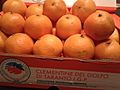
Italian cultivar, Clementine del golfo di Taranto
-
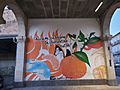
Clementine Mural in Puisserguier France, celebrating Father Abram, founder of the Algerian Misserghin orphanage where the 1st citrus clementina was selected
-
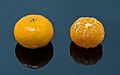
Seedless clementine, unpeeled and peeled
